Feb 9, 2026
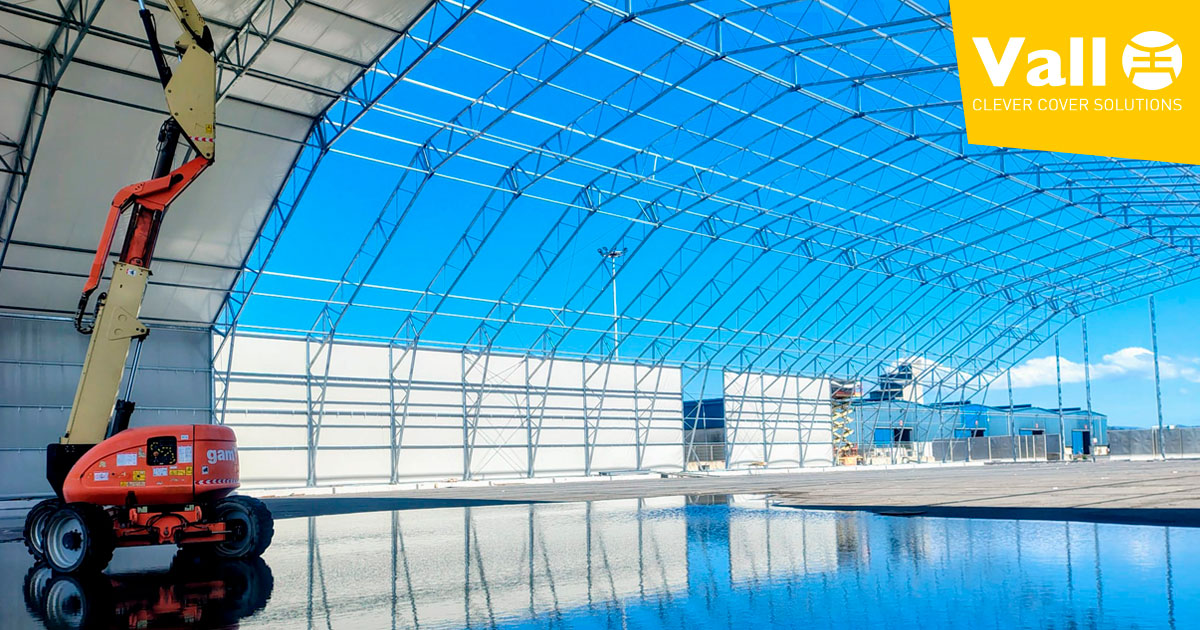
The advantages of prefabricated warehouses for port terminals make them the most profitable, beneficial, and suitable solution for both temporary and urgent use as well as for a prolonged establishment over time. Their usage possibilities are immense and cover options such as port logistics warehouse, container terminal, passenger terminal, port service and maintenance warehouse, or for waste reception and management, among others. At VALL, we have years of experience in the design, manufacturing and assembly of efficient prefabricated industrial warehouses for ports. We know our prefabricated warehouses well, how they have helped our clients thanks to their advantages, and this is a summary of the main ones.

 https://www.mimpo.com/articulo/puertos-de-europa-mas-importantes https://www.vascologistics.com/futuro-transporte-maritimo-logistica-sostenible-retos-2025/
The advantages of prefabricated warehouses for port terminals.
Agility in assembly and operational startup.
Port terminals often have an urgent need for new enclosed spaces, whether to take advantage of specific opportunities, due to a change in their clients' needs, or to expand their capabilities as a logistics port, among others. In these cases, agility is essential for the quickest possible assembly and operational startup. In this sense, prefabricated warehouses provide the fast and efficient response required and expected to face the challenges of maritime port logistics, take advantage of market opportunities or infrastructure changes for better use of intermodality, and thus have an efficient or even emergency solution in case an eventuality makes it necessary to have an operational warehouse in a short time.Flexibility and adaptability, two key advantages of prefabricated warehouses in port terminals.
The easy and profitable adaptation to the changing needs of port terminals makes demountable prefabricated warehouses the perfect solution. At VALL, we have modular warehouse models that are easy to expand or reduce in size, for temporary or permanent use, available for purchase or rental. They are designed to provide an efficient operational response for different uses, from cereal storage to temporary storage for the automotive sector or consumer goods, and a wide variety of other possibilities. They do not require foundations and are demountable modular warehouses and reusable, which means they can be relocated as many times as necessary.
Resistance, safety, and durability.
The steel prefabricated warehouses and aluminum prefabricated warehouses are designed to withstand the demanding environmental conditions that are so common in port areas, such as strong winds and a saline environment. They are metal-textile warehouses manufactured with durable and high-resistance materials. At VALL, all our prefabricated warehouses comply with the demanding Eurocodes and are designed under the EN1090 certificate, the demanding European standards that guarantee their quality and resistance against the most demanding loads.The watertightness of VALL prefabricated warehouses, a valuable advantage for installation in port terminals.
Watertightness is a key value in warehouses for port terminals and essential for many goods such as grain, high-precision technological devices, or food. VALL prefabricated warehouses are designed and manufactured to offer excellent watertightness if the client requires it, with sandwich panel enclosures or high-resistance tarpaulins. We offer the possibility to choose prefabricated warehouses with TWS covers, which provide excellent thermal insulation, improve stability, and guarantee watertightness by avoiding water condensation.Versatility and possibilities of use.
The wide and diverse usage possibilities of prefabricated logistics warehouses for port terminals and the many possibilities regarding what an industrial warehouse in a port can be converted into offer an advantage for these spaces. They can be used for storage logistics in ports for general cargo, bulk, containers, or small formats, as a warehouse for port maintenance, fiscal inspection, container management, or passenger attention, to provide services to terminal workers, and for waste reception as a first step for its proper management, among many others.Energy efficiency and sustainability.
Sustainability and energy efficiency are other advantages of prefabricated warehouses for port terminals. The importance of energy efficiency is key to the savings and profitability of these warehouses, with the reduction of energy needs and better efficiency and durability of devices or precision machines. They contribute to the reduction of the carbon footprint of the terminal and the companies operating in the warehouse and offer a more comfortable and safe environment for workers and goods.Reduced costs and high profitability of prefabricated warehouses for port terminals compared to traditional alternatives.
Due to their rapid execution and assembly, their energy efficiency, their flexibility and adaptability, as well as their resistance and durability, among other aspects, prefabricated warehouses for port terminals are an advantageous solution, more economical than traditionally constructed warehouses. At VALL, we offer two modalities, rental or purchase, to facilitate advantageous financial decision-making for every company.Optimized space and functional design.
These warehouses can be either compartmentalized warehouses or open-plan prefabricated warehouses without interior columns, allowing for excellent space optimization, including height, which means better utilization of floor square meters and facilitates the use of automated solutions within them. Furthermore, they can be conditioned to measure for each case's needs, with the precise accessories for their best operation and efficiency.
Sources
Table of contents
- Agility in assembly and operational startup.
- Flexibility and adaptability, two key advantages of prefabricated warehouses in port terminals.
- Resistance, safety, and durability.
- The watertightness of VALL prefabricated warehouses, a valuable advantage for installation in port terminals.
- Versatility and possibilities of use.
- Energy efficiency and sustainability.
- Reduced costs and high profitability of prefabricated warehouses for port terminals compared to traditional alternatives.
- Optimized space and functional design.