Sep 3, 2025
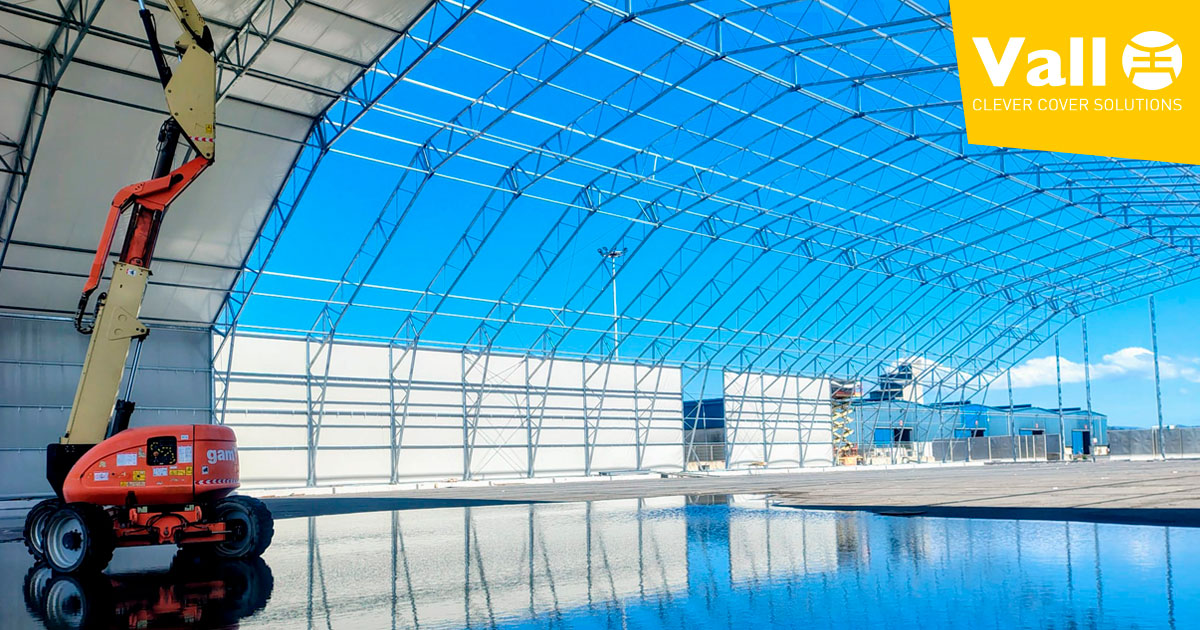
The automation and digitalization of logistics warehouses is a reality led by large companies, with medium and small businesses following closely. Although adopting these advances and implementing them effectively represents a challenge for many companies, there are factors and decisions that can either facilitate or hinder this process. A clear example is the choice of logistics spaces. In this regard, open-space prefabricated buildings play a crucial role in facilitating automation and digitalization in the logistics sector.
At VALL, we know this well. Among our clients are major companies such as Seur, Amazon, and Mercadona, which rely on us and use Maxispace steel removable buildings—large, efficient, and open even at height—and Aluspace aluminum removable buildings for their logistics centers.
Understanding the importance of open spaces in logistics is easier when you see how they directly support the implementation of automation and digitalization. This clearly shows why open-space prefabricated buildings are effective, profitable, and fast solutions for driving technological innovation and supporting companies in the logistics sector as they adopt these processes.


Sources:
https://biblus.us.es/bibing/proyectos/abreproy/93932/fichero/TFG-3932+JIMÉNEZ+BELLIDO%2C+RAMÓN+ENRIQUE.pdf
https://oaklarpwell.com/vall-estructures/
https://www.cadenadesuministro.es/noticias/el-camino-hacia-la-automatizacion-de-los-centros-logisticos_1353718_102.html
At VALL, we know this well. Among our clients are major companies such as Seur, Amazon, and Mercadona, which rely on us and use Maxispace steel removable buildings—large, efficient, and open even at height—and Aluspace aluminum removable buildings for their logistics centers.
Open-Space Prefabricated Buildings to Facilitate Automation and Digitalization in the Logistics Sector
Open-Space Prefabricated Buildings: Space Optimization and Amplitude to Install Automated Racking and Conveyor Systems for Today's Logistics
Automation improves productivity and performance in the logistics sector, reduces costs, speeds up processes, and enables faster, more cost-efficient operations with fewer errors. However, this requires optimized spaces that can accommodate the necessary solutions to implement these technologies and ensure an agile, efficient flow of goods. Among the most widely used solutions are large-scale automated racking, conveyor belts, and stacker cranes. These systems require large open areas without columns, beams, or trusses that could become obstacles. Additionally, profitable logistics depends on maximum space optimization. Open-space prefabricated buildings provide exactly what the modern logistics sector needs: unobstructed space at both floor and height levels, making it possible to install and optimize the functioning of the equipment required for process automation and its digital tracking for better management.Efficiency and Safety: The Importance of Open Interiors Without Columns or Pillars to Enable Safe Movement of Automated Equipment and Transport Robots
The open space that a prefabricated building without columns, pillars, or beams provides is essential for adopting new logistics technologies. The absence of barriers reduces maneuvering requirements for autonomous vehicles and transport robots inside the facility. This significantly increases safety, efficiency, and speed of operations, even under full load. The cost of these robots and vehicles is also amortized more quickly thanks to higher operational efficiency.
Tall Open-Space Prefabricated Buildings: Key for Implementing High-Density Automated Storage Systems
When discussing open logistics spaces, people often think only about unobstructed floor space. However, open vertical space is equally important. Prefabricated buildings without girders or trusses acting as barriers enable the implementation of advanced high-level systems such as state-of-the-art stacker cranes. This makes vertical automated storage possible, creating safer and more efficient logistics warehouses.Tailor-Made Design of Open-Space Logistics for a Technology-Driven Sector
Having an open-space prefabricated building makes designing spaces and adopting innovative technologies simpler and more effective. Each company and logistics center may have different requirements in terms of available areas and their placement within the facility. Tailor-made design enables the creation of areas in the most suitable zones to facilitate transport flows and operational efficiency, without barriers or obstacles that could hinder processes.Open-Space Design and Energy Efficiency in Prefabricated Buildings to Facilitate Automation and Digitalization
The importance of energy efficiency in automation and digitalization within the logistics sector cannot be overstated. Digital systems and processes require high energy consumption, and companies—driven by social demand and corporate responsibility—strive to reduce their carbon footprint. Many digital and automated systems generate heat, and for proper performance and durability, they require a cooler environment. Prefabricated buildings with excellent energy efficiency offer more sustainable solutions. They help maintain suitable indoor temperatures for the preservation of autonomous and digital equipment as well as delicate goods, all while keeping energy consumption low.
MAXI
SPACE
SPACE
The strongest and most sustainable removable buildings on the market | MAXISPACE
DISCOVER MAXISPACE
The Importance of Sustainability in Open-Space Prefabricated Buildings for Automation and Digitalization in the Logistics Sector
This efficiency also translates into higher sustainability and significant savings in energy supply costs. A notable example is Maxispace, the most solid and sustainable removable building on the market, open in three dimensions. Contact us for any questions or to request a tailored quote.Sources:
https://biblus.us.es/bibing/proyectos/abreproy/93932/fichero/TFG-3932+JIMÉNEZ+BELLIDO%2C+RAMÓN+ENRIQUE.pdf
https://oaklarpwell.com/vall-estructures/
https://www.cadenadesuministro.es/noticias/el-camino-hacia-la-automatizacion-de-los-centros-logisticos_1353718_102.html
Table of contents
- Open-Space Prefabricated Buildings: Space Optimization and Amplitude to Install Automated Racking and Conveyor Systems for Today's Logistics
- Efficiency and Safety: The Importance of Open Interiors Without Columns or Pillars to Enable Safe Movement of Automated Equipment and Transport Robots
- Tall Open-Space Prefabricated Buildings: Key for Implementing High-Density Automated Storage Systems
- Tailor-Made Design of Open-Space Logistics for a Technology-Driven Sector
- Open-Space Design and Energy Efficiency in Prefabricated Buildings to Facilitate Automation and Digitalization
- The Importance of Sustainability in Open-Space Prefabricated Buildings for Automation and Digitalization in the Logistics Sector