Jun 5, 2025
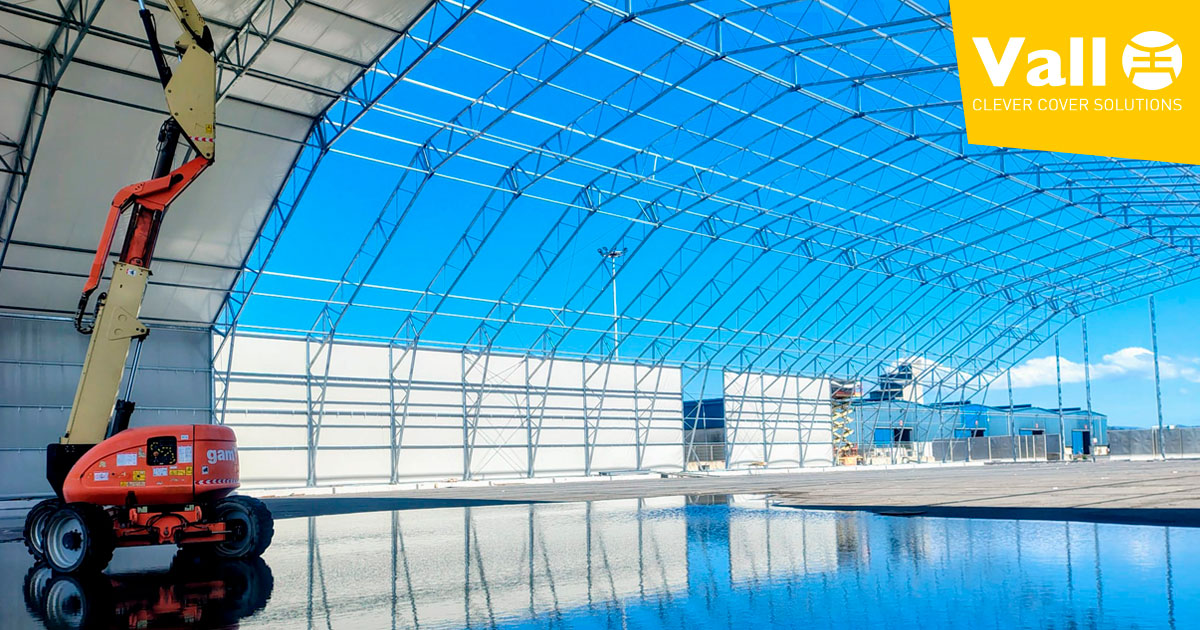
The prefabricated industrial buildings for quality control, testing, or R&D areas provide companies with the space under suitable conditions to efficiently carry out the required tasks. The fast assembly and start-up, their features, advantages, and functionality allow having, quickly and cost-effectively, a space conditioned for these processes which generally require precision, safety, and demanding environmental requirements.
Each industrial sector may have different needs for its quality control area as well as for its testing and R&D departments. Pharmaceutical, food, automotive sectors, component manufacturing, and others require spaces with different conditions. But all sectors share key requirements that prefabricated industrial buildings perfectly meet. At VALL, we design, manufacture, and assemble prefabricated industrial buildings for various areas, uses, and departments of companies, entities, and large corporations. Including spaces suitable for research and development, innovation, testing, and quality control.
The prefabricated buildings with TWS fabric roofing system allow creating a condensation-free and airtight space that helps maintain the suitable environment in these areas.
 Sources:
https://www.repsol.com/es/energia-futuro/tecnologia-innovacion/innovacion-y-desarrollo/index.cshtmlhttps://www.plannacionalidi.es/que-es-idi/https://www.defensa.gob.es/Galerias/portalservicios/aseguramientocalidad/AdC-13_IT4201_05D.pdfhttps://www.juntadeandalucia.es/organismos/industriaenergiayminas/areas/industria/seguridad.htmlhttps://www.icac.gob.es/sites/default/files/2020-08/17.%20Recomendaci%C3%B3n%20Uni%C3%B3n%20Europea%20-%20Control%20de%20calidad.PDF
Prefabricated industrial buildings for quality control, testing, or R&D areas: advantages and benefits.
Ease of creating a customized space in prefabricated industrial buildings: adaptability and flexibility over time.
Due to their particularities, each company requires a different design for testing, quality control, or R&D areas, which can also vary over time depending on the company's direction or the type of products it manufactures and needs to validate or develop. Prefabricated industrial buildings are easily adaptable and offer great flexibility to create the appropriate space in each case and moment, allowing modifications in the future if those needs change over time.- Openness. In some companies, these areas must be large and open in both floor plan and height. In this case, the steel industrial buildings Maxispace are the suitable and cost-effective solution.
- Partitioned spaces. All steel buildings by VALL, both steel and aluminum structures, can be partitioned as the company requires. Whether into small cubicles, large areas, or spaces of various sizes with the necessary level of insulation or airtightness in each case.
Airtightness or proper ventilation conditions in prefabricated industrial buildings for quality control, testing, or R&D areas.
These types of areas may house very different spaces depending on each company's requirements. From laboratories requiring total airtightness and absence of condensation to engine testing zones needing efficient ventilation, among many others.Possibility to install environmental control systems, security, and specific equipment in quality control, testing, or R&D areas.
A common requirement in quality control, R&D, and testing areas is the installation of environmental control systems. These systems allow achieving, maintaining, and verifying the environmental conditions of the space. In prefabricated industrial buildings, air filters, temperature, and humidity controls can be installed. Prefabricated industrial buildings can offer solutions that facilitate maintaining the conditions each company needs in this regard. The advantages of prefabricated buildings with TWS roofing stand out in this area. This system is available for prefabricated metal structure buildings MaxiSpace, SteelSpace, and AluSpace.The prefabricated buildings with TWS fabric roofing system allow creating a condensation-free and airtight space that helps maintain the suitable environment in these areas.
Lighting, ambient temperature control, and energy efficiency in prefabricated industrial buildings.
The energy efficiency provided by VALL prefabricated industrial buildings is another highlight due to the savings in energy consumption they allow in areas where ambient temperature control must be rigorous year-round. Additionally, it is possible to choose among different types of enclosures and roofs, with translucent solutions offering great lighting savings or opting for opaque solutions that help create the appropriate darkness or lighting conditions in each case.The importance of a prefabricated metal structure building with resistant, healthy, and low-maintenance materials.
- Resistance, essential for the protection of goods, personnel, and equipment. Testing may involve all kinds of events and contingencies. Often, risks require a safe and resistant infrastructure. The advantages of steel structures and aluminum structures are superior in this regard.
- Healthiness. To guarantee accurate results, a healthy environment is necessary. Structural materials like steel and aluminum contribute to achieving a healthy space without the risk of particles or residues detaching, as may occur with concrete.
- Low maintenance. Besides great savings, they help facilitate and minimize interior cleaning tasks and create an airtight space without cracks or maintenance work that could alter the interior environment.
Other considerations for prefabricated industrial buildings for quality control, testing, or R&D areas.
- Availability of a wide variety of accessories to choose the suitable ones for creating the required area in prefabricated industrial buildings: doors, lighting, heating or air conditioning systems, access points, loading docks, and more.
- They are the temporary or permanent option of rapid operational start-up companies need.
- Sustainability. They are the sustainable solution for a greener quality control, innovation, and development area.
- Cost-effective solution for buy or rent.
Sources:https://www.repsol.com/es/energia-futuro/tecnologia-innovacion/innovacion-y-desarrollo/index.cshtmlhttps://www.plannacionalidi.es/que-es-idi/https://www.defensa.gob.es/Galerias/portalservicios/aseguramientocalidad/AdC-13_IT4201_05D.pdfhttps://www.juntadeandalucia.es/organismos/industriaenergiayminas/areas/industria/seguridad.htmlhttps://www.icac.gob.es/sites/default/files/2020-08/17.%20Recomendaci%C3%B3n%20Uni%C3%B3n%20Europea%20-%20Control%20de%20calidad.PDF
Table of contents
- Ease of creating a customized space in prefabricated industrial buildings: adaptability and flexibility over time.
- Airtightness or proper ventilation conditions in prefabricated industrial buildings for quality control, testing, or R&D areas.
- Possibility to install environmental control systems, security, and specific equipment in quality control, testing, or R&D areas.
- Lighting, ambient temperature control, and energy efficiency in prefabricated industrial buildings.
- The importance of a prefabricated metal structure building with resistant, healthy, and low-maintenance materials.
- Other considerations for prefabricated industrial buildings for quality control, testing, or R&D areas.