Apr 23, 2025
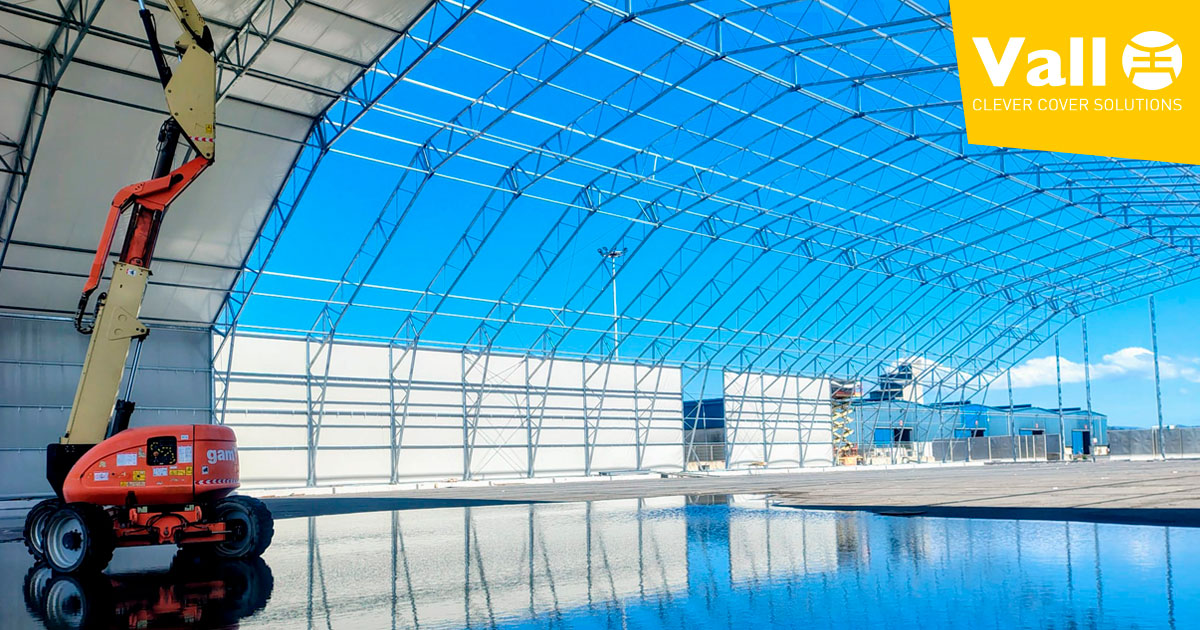
In today's rapidly changing and complex geopolitical context, the importance of prefabricated buildings for the agri-food industry is growing. During this time of multi-level instability, the ability to quickly install storage buildings for the agri-food sector provides a significant advantage for businesses and countries, improving their response capacity. Prefabricated buildings for the agri-food industry in the current geopolitical climate represent a cost-effective and rapid alternative for installation in required locations, equally easy to dismantle when needed.
The entire world is immersed in a geopolitical context presenting complex challenges that change at breakneck speed. This forces the agri-food industry to make quick decisions to overcome these obstacles and requires new secure storage solutions for their goods and raw materials. The installation of modular buildings for agri-food raw materials provides a sustainable, cost-effective and adaptable solution that enables the sector to maintain operational capacity in this rapidly changing environment.

Challenges for the agri-food industry in the current changing and complex geopolitical context and the importance of prefabricated buildings.
Prefabricated buildings for the agri-food industry: the advantageous solution in the current changing and complex geopolitical context.
- They are effective and agile solutions that can be installed and become operational within days or weeks, depending on their size and specifications.
- They feature appropriate characteristics to preserve the safety and quality of agri-food raw materials and processed foods, protected from adverse weather conditions.
- Their high degree of airtightness and insulation is crucial for optimal preservation of agri-food goods, preventing pests from accessing the merchandise and condensation moisture from causing mould and losses.
Changing tariff policies requiring longer retention of agri-food raw materials until new markets are found.
The tariff policy of the US administration is generating reciprocal responses from affected countries. The most serious issue is that these imposed tariffs keep changing, with uncertainty about which products will face these additional costs. Producers may be forced to allocate more storage space for raw materials not purchased in traditional markets while awaiting sale elsewhere. Meanwhile, the agri-food industry strives to supply what's needed at all costs before tariffs take effect, requiring appropriate buildings for secure food storage. The demountable industrial buildings provide an agile storage solution.Establishment of new trade alliances at the pace of political developments and changes in agri-food product destinations.
The slowdown in some traditional markets and imposed tariffs necessitate developing new trade alliances. The EU-Mercosur association agreement is one example, but not the only one. New trade agreements are also being prepared looking towards Asia. This requires charting new routes for agri-food raw materials and finished products, making it necessary to have storage solutions in new locations.Significant changes in the Panama Canal and Suez Canal with creation of new routes using industrial buildings for the agri-food industry in new ports.
The disruptions in the Suez and Panama Canals affect international food transportation. While drought had already created bottlenecks in recent years, 2025 brings additional complications from other conflicts. To swiftly address this problem, it's essential to have prefabricated buildings in ports along new routes.Import restrictions and food sovereignty: the importance of prefabricated buildings as a solution for secure product storage.
Legislative changes in some countries to ensure food sovereignty, protect their economies from massive inflows of competing foreign products, and emerging problems like the egg crisis alongside other issues caused by avian flu are restricting import and export of certain foods. Producers are forced to maintain adequate buildings to store their production while awaiting distribution in domestic or new markets. Protectionism and the need for quickly available buildings for the agri-food industry go hand in hand.Inflation crisis and the need for secure storage of food and raw materials for the agri-food industry to respond.
Rising prices of auxiliary raw materials like cardboard, aluminium or glass also affect the agri-food industry, which uses them for packaging. To reduce losses and minimise product cost increases from this, the industry requires storage buildings for these complementary agri-food products. Furthermore, prefabricated buildings for the agri-food industry provide an agile and effective solution to address potential supply crises.AI competition for energy and its influence on location of agri-food storage and production buildings.
Adding to this is the rise of generative AI and its massive energy and water supply needs. The agri-food industry must compete for resources while preventing impacts on costs and supply availability. This may force agri-food businesses to relocate their production facilities or animal husbandry and storage operations to new locations further from cities but nearer photovoltaic fields, maintaining energy supply and cost control. In this regard, VALL prefabricated industrial buildings are sustainable, cost-effective solutions with good energy efficiency.
Sources:
- https://www.elconfidencial.com/mundo/2025-02-06/sebastien-abis-geopolitica-alimentacion_4058319/
- https://nexusavicultura.com/la-geopolitica-sera-el-factor-que-mas-afectara-a-la-avicultura-en-2025/
- https://www.bloomberglinea.com/economia/alimentos-mas-caros-e-interrupciones-del-comercio-amenazan-al-mundo-en-2025/
- https://www.revistaaral.com/texto-diario/mostrar/5207967/geopolitica-proteccionismo-marcan-7-congreso-desarrollo-sostenible
Table of contents
- Prefabricated buildings for the agri-food industry: the advantageous solution in the current changing and complex geopolitical context.
- Changing tariff policies requiring longer retention of agri-food raw materials until new markets are found.
- Establishment of new trade alliances at the pace of political developments and changes in agri-food product destinations.
- Significant changes in the Panama Canal and Suez Canal with creation of new routes using industrial buildings for the agri-food industry in new ports.
- Import restrictions and food sovereignty: the importance of prefabricated buildings as a solution for secure product storage.
- Inflation crisis and the need for secure storage of food and raw materials for the agri-food industry to respond.
- AI competition for energy and its influence on location of agri-food storage and production buildings.